Retire early, live anywhere. Get a paycheck that lasts 50 years.
The 4% rule was built for a 30-year retirement in one country. Bordo turns your savings into a monthly paycheck that lasts across borders: taxes in two countries, two currencies, pensions from each.
From a few answers to a monthly paycheck
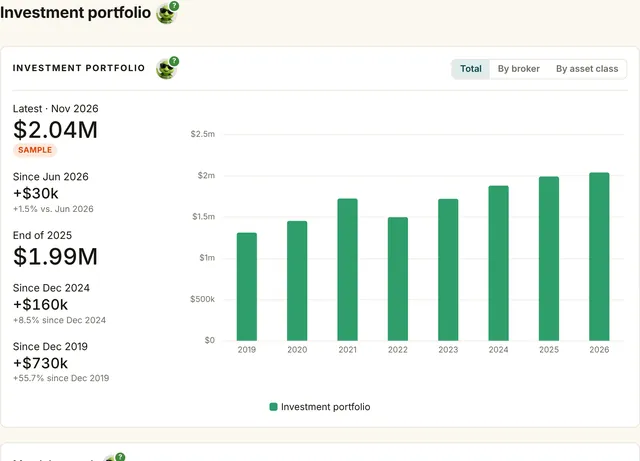
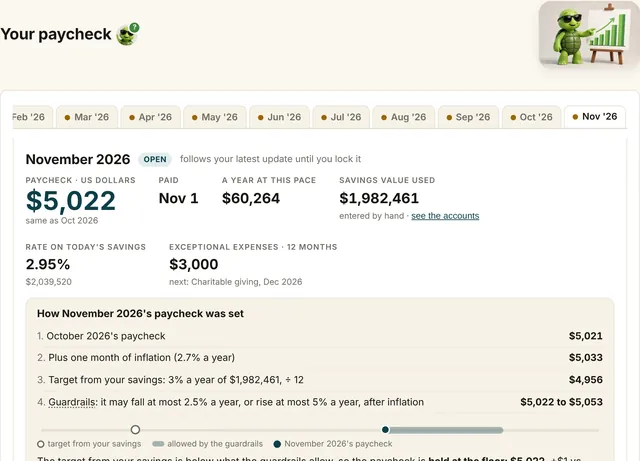
Screens from the calculator, with the sample plan: a retired couple with about $2 million saved. Scroll for more.
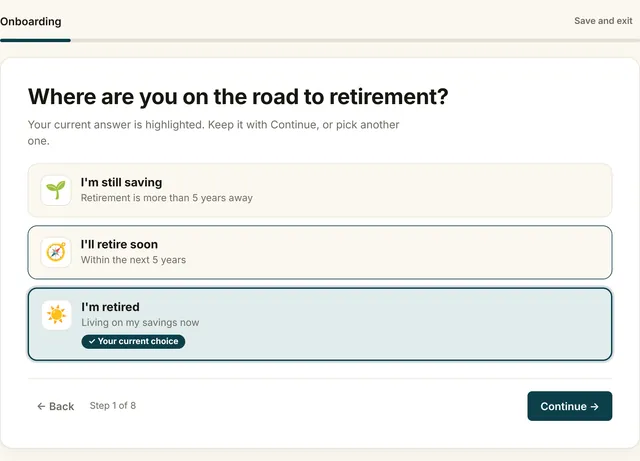
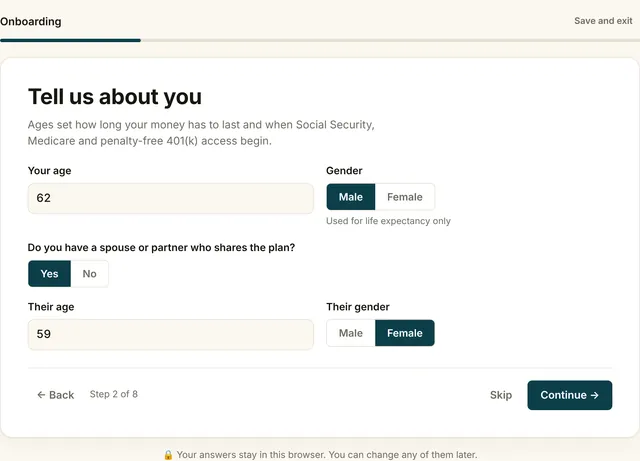
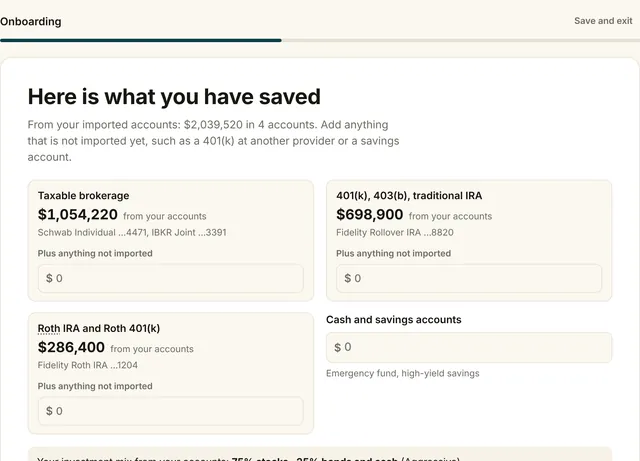

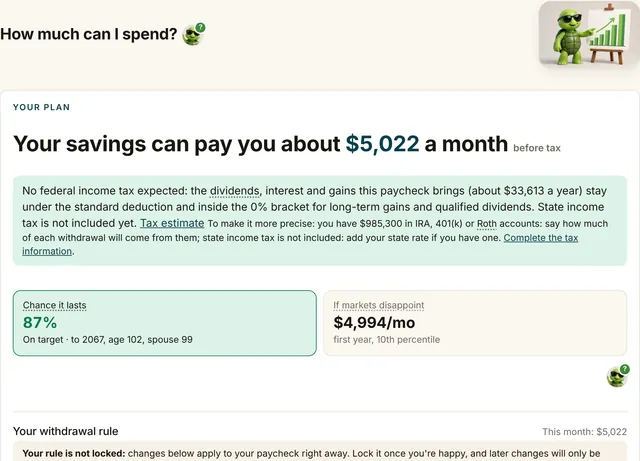




An expat retirement planner that pays you every month
Bordo is a free retirement paycheck calculator and expat retirement planner for early retirees. It turns your savings into a monthly paycheck you can trust: how much to spend this month, where to take it from, what's coming up, and whether it lasts, in dollars and euros, wherever you live.
It's built for the whole journey: while you're still saving, the year you stop working, and every month after.
Your monthly paycheck, stress-tested
Dynamic spending sets this month's amount from your real portfolio, with the next pay date, in dollars and euros. Every plan is tested on 150 years of markets and on the latest Vanguard, J.P. Morgan and Schwab forecasts.
Your future paycheck
Still saving? See what your savings could pay you at 50 or 55, tested on 2,000 market paths, and what saving more or retiring later changes.
Big expenses, planned
College, cars, a roof, a move abroad: each is paid in the month it falls due, on top of your paycheck, so none of them surprises you.
Social Security and pensions
Estimates what the US and France will pay you, including what stopping work early does to your benefit.
Taxes across borders
US federal tax, French income tax and health contribution, the UAE, Portugal and Spain, treaties and withholding, set by your citizenship and where you live.
All your accounts, kept private
Import from Schwab, Fidelity, Vanguard, IBKR and 20+ brokers: holdings, tax lots, dividends, and which shares to sell. Your files are read in your browser and never uploaded.
Still saving? Bordo is the cautious planner: your savings are grown on 2,000 market paths, not a steady 6% a year, and the paycheck if markets disappoint is shown right next to the typical one, along with your taxes and budget now and once you retire.
- Answer a few questionsAbout 5 minutes. Rough numbers are fine.
- Add your accountsImport your broker files, or keep rough totals for now.
- Get your paycheckThen come back each month: Bordo keeps it on track.
Replay history: fixed 4% vs dynamic
Pick a year to retire in and a length of retirement. Both retirees start with $1,000,000 in 60% US stocks and 40% 10-year Treasuries, and take 4% the first year. Everything is in constant dollars of the year you retire, so a flat line means the same purchasing power.
Portfolio value
Yearly spending
Monthly S&P 500 total returns (Robert Shiller's data), 10-year Treasury returns and US inflation, 1871 to today. No fees or taxes; rebalanced monthly. Past markets don't predict future ones.
Which one is better for you?
Neither rule is free. The 4% rule buys a steady paycheck with the risk of running out; the dynamic rule buys staying power with an income that moves. For most early retirees, with long horizons and some room to adjust, the dynamic rule is the better trade.
| 4% rule | Dynamic spending | |
|---|---|---|
| Lifetime income | Capped at day one's amount, plus inflation | Typically 17–22% more, from the same savings |
| Your income | The same every year, plus inflation | Follows the markets, within +5% / −2.5% a year |
| Risk of running out | Low over 30 years, rising sharply over 40–60 | Much lower: spending shrinks before the portfolio does |
| After a crash | Keeps selling the same amount at low prices | Cuts a little, sells less |
| After a boom | Often leaves a large unspent fortune | Lets you share in the gains, gradually |
| Best for | Short retirements, fixed bills, no room to adjust | Long retirements, flexible budgets, early retirees |
The full story: why the 4% rule isn't enough for early retirement →The rule in one minute, what changes when you retire at 45 or 55, and how dynamic spending works, step by step.
You did the hard part. You saved, you quit. So why can't you sleep?
No salary, decades ahead, maybe a new country with new taxes and a new currency: one monthly number decides whether you stay retired.Reaching financial independence feels like the finish line. For most early retirees it's where the anxiety starts: no more salary, decades ahead, and one number standing between you and going back to work. Your monthly paycheck. And if you move abroad, every rule under that number changes: who taxes it, which currency you spend, which accounts still work, and what to do with your investments.
"I quit at 32. Every red day on the market I open my spreadsheet again. Is 4% really safe for sixty years?"
"Two kids, college in eight years, a car that won't last. My calculator gives me one monthly number and ignores all of it."
"I can finally stop. But until 59½, Medicare and Social Security, which account do I even draw from first?"
"We move to Portugal next year. Who taxes our withdrawals? Should we sell before we go, or keep our US funds? And what if the dollar drops 15%?"
The questions we kept asking ourselves, and still hear from every early retiree we meet, at home and abroad.
The expenses your calculator forgot
Most retirement calculators assume life costs the same every month, forever. Real life doesn't. College tuition, a new car every eight years, a roof, a wedding, helping a parent, a move abroad and tax returns in two countries: none of it shows up in "4% a year", yet together it can swallow more than a third of a portfolio.
Spend your paycheck without planning for them and you find out the hard way, in the year the bill arrives, usually right after a crash.
- College for two children (public, in-state)$248,000
- Four car replacements$60,000
- A wedding$35,000
- A new roof$30,000
- Moving abroad: visas, movers, deposits, private health cover until you qualify$25,000
- Tax returns in two countries, every year$45,000
Changing country changes everything
Reaching financial independence is often the moment people move: to live better on the same savings, closer to family, or simply somewhere they love. The day you change country, the rules under your plan change too. Most retirement tools ignore it.
We have lived it. We reached financial independence and moved between the US and Europe: two tax systems, two currencies, accounts that don't like to cross borders, and families on both sides of the ocean. Bordo is built around that, and is clear about what it covers today.
Where you pay tax
Your tax home moves with you, and treaties decide who taxes what.
US to France, with real numbers →Your investments
Keep, move or sell before you go: some US brokers close accounts abroad, and European rules block US funds.
What happens to a Roth abroad →Health cover
Medicare does not follow you abroad, and France can charge a health contribution on investment income.
Health cover abroad →Two currencies
Savings in dollars, rent in euros: a 10% move in the exchange rate hits like a bad market year.
Compare cities with a currency shock →Pensions from each country
Social Security and the French pension both count your working years, and stopping early lowers each one differently.
France to the US →Heirs in two systems
US estate tax for non-citizens starts at $60,000 of US assets, and French inheritance rules work very differently.
Estate planning across borders →What Bordo covers
- Taxes for residents of the US 🇺🇸, France 🇫🇷, the UAE 🇦🇪, Portugal 🇵🇹 and Spain 🇪🇸, with the US treaties
- Social Security and French pension estimates
- A realistic budget from your own card and bank statements
- Where to retire: 35 US and French cities ranked for you, the relocation audit and the move plan
- Estate planning across borders and a yearly check-up
- Dollars and euros side by side
- US state income tax, except an approximate rate in Find my city
- Estate tax outside the US and France
- Countries not listed here
- Filing returns: Bordo estimates taxes, it does not file them
Portugal and Spain cities come next, then 🇬🇧 🇮🇹 🇬🇷 🇲🇽. Tell us where you're headed: it decides which countries we add.
Join the Bordo Community
Explore the options that can support you on your international journey: trusted help with taxes in two countries, residency and visas, moving money, health insurance abroad and estate planning, country guides, and soon a forum to meet people who have already made the move.
- Free to join, one email a week at most
- Tell us where you're headed: it decides which countries we add next
- First access to the forum when it opens
What Bordo offers
The planner and the tools for moving abroad are free. When you want people beside you for the move, there is expatriation planning, priced up front.
Coming A community forum, trusted cross-border professionals and Bordo AI. Join the list →
This week across borders
Bordo gathers the news that matters when you retire early in another country: the FIRE community (ESI Money, Financial Samurai, Mad Fientist, Go Curry Cracker and more), expat tax and residency and golden visas. Pick your country and see what changes for you.
Built by people who reached FIRE and moved between the US and Europe. Every number here comes from public market data you can replay yourself, and the guides show their sources.
Built a plan with Bordo? Tell us how it went: with your permission, your story could help the next person.
Try the retirement paycheck calculator on your own portfolio
Answer a few questions (rough totals are fine) and Bordo turns dynamic spending into a monthly paycheck from your savings, tested against history and today's forecasts.
Start the 5-minute setup →
- Import your broker files (Schwab, Fidelity, IBKR, Vanguard and more)
- Your monthly withdrawal, with the ceiling, floor and a maximum
- "How much can I spend?" tested on 150 years of markets and on Vanguard, J.P. Morgan and Schwab forecasts
- Penalty-free access before 59½, required distributions and taxes for residents of the US, France, the UAE, Portugal and Spain
- Dollars and euros side by side, for a life across borders
Your data stays private. Files you import are read inside your browser and never uploaded. No ads, no tracking cookies, no account to sell you anything. This is an educational tool, not financial advice.
Quick answers
What is Bordo?
A free planner for early retirees and people who live across borders. It turns your savings into a monthly paycheck with dynamic spending, tested on 150 years of markets, and adds Social Security, pensions and taxes in the US and France. Your data stays on your device.
Is the 4% rule safe for early retirement?
It was tested on 30-year retirements. Over 50 or 60 years, research points to safe fixed rates closer to 3.25–3.5%. Adjusting your spending a little with the markets, as dynamic spending does, usually lets you start higher with similar safety.
Does Bordo work if I retire abroad?
Yes. It handles dollars and euros side by side, US citizens taxed wherever they live, the US–France tax treaty, French social levies and residents of the UAE, and our guides cover visas and taxes country by country.
More in the calculator's questions and on the blog.